






We manufacturer Precast Concrete Culvert boxes in UAE are often forgotten workhorses of drainage and roadway construction. They are buried under roads, embankments, and railroad tracks, and they bear the weight of roads, embankments and railroad tracks while carrying storm water, irrigation flow, or pedestrian or vehicle traffic under a structure. Whether you are looking to install a drainage system, road crossing or a utility passage anywhere in Dubai or throughout the UAE, here is what you should be mindful of when choosing precast box culverts to buy . Fast delivery in UAE.
Precast Concrete Culvert Boxes: What are They?
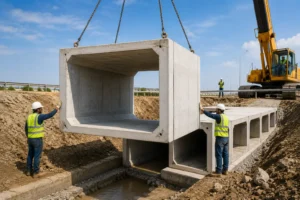
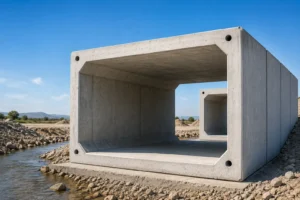
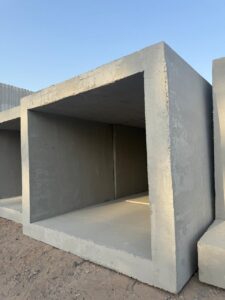
Precast concrete culvert boxes are concrete box structures, usually in a rectangular or square shape, that are pre-cast to provide a gap under a road, railway or embankment for water, utilities or even vehicles. The box shape provides a larger flow area per height and is particularly beneficial in areas where the space above the culvert (cover depth) is restricted, unlike a circular shaped pipe culvert.
Since we supply custom size culvert box are precast, and Installation Assistance , they are delivered to the site in a cured and structurally sound condition. This eliminates the need for large amounts of formwork and curing on site, which is particularly valuable where traffic disruption and surrounding construction activities must be kept to a minimum. Contact us today.
Applications of Precast Culvert Boxes
Precast box culverts perform many important infrastructure functions throughout the UAE.
1. Road and Highway Drainage Crossings
Allowing stormwater runoff to pass beneath roads while maintaining uninterrupted traffic flow.
2. Railway Underpasses and Drainage
Providing structural passages for water or utilities beneath railway lines while accommodating high load and settlement requirements.
3. Irrigation and Agricultural Channels
Supporting controlled water flow beneath access roads and embankments in agricultural developments and landscaped areas.
4. Pedestrian and Service Underpasses
Larger box culverts can also function as pedestrian underpasses or service vehicle access tunnels where required.
5. Stormwater Attenuation and Conveyance
Managing peak stormwater flow within urban drainage systems, particularly during periods of heavy seasonal rainfall.
6. Utility Corridors
Providing protected passages for cables, pipelines and utility services beneath roads and embankments.
Types of Precast Concrete Culvert Boxes
Precast concrete culvert boxes can be manufactured in different structural configurations depending on hydraulic capacity, loading requirements, and site conditions. These variations enable engineers, consultants, and contractors to select the most suitable solution for road infrastructure, drainage systems, utility crossings, and stormwater management projects throughout the UAE.
Single Cell Box Culverts
The single cell box culvert is the most commonly used configuration. It consists of a single rectangular opening formed by a top slab, bottom slab, and two vertical side walls that are cast together as one monolithic precast unit.
Single cell culverts are ideal for medium-flow drainage applications and are widely used beneath roads, highways, access roads, utility crossings, and stormwater channels. Their simple structural design makes them cost-effective to manufacture, transport, and install while providing excellent structural performance.
Common Applications:
- Highway drainage
- Road crossings
- Residential developments
- Stormwater drainage
- Utility corridors
Double Cell and Multi-Cell Box Culverts
When higher water flow capacity or a wider span is required, double cell and multi-cell box culverts provide an effective solution. These systems divide the opening into two or more parallel cells using reinforced internal walls while maintaining excellent structural stability.
By distributing hydraulic loads across multiple openings, these culverts increase discharge capacity without significantly increasing the overall structure width. They are commonly specified for major infrastructure developments and flood management systems across the UAE.
Common Applications:
- Major highways
- Large drainage channels
- Flood control projects
- Airport infrastructure
- Industrial developments
Three-Sided (Open Bottom) Box Culverts
A three-sided box culvert, also known as an open-bottom culvert or rigid frame culvert, is manufactured without a precast bottom slab. Instead, it is installed directly onto cast-in-place footings or the natural streambed.
This configuration helps preserve the existing watercourse, allowing natural sediment movement and improving aquatic habitat continuity. It is particularly suitable where excavation depth is limited or groundwater conditions make full box culvert impractical.
Common Applications:
- Natural waterways
- River crossings
- Environmentally sensitive areas
- Stream restoration projects
- Drainage channels
Arch Culverts
Precast arch culverts feature a curved structural profile that efficiently distributes loads throughout the arch rather than relying solely on slab bending resistance. This allows larger spans to be achieved using less material while maintaining excellent structural strength.
Arch culverts are often selected for wider waterway crossings where hydraulic performance, durability, and aesthetics are important considerations.
Common Applications:
- Large drainage crossings
- River crossings
- Highway infrastructure
- Landscape-sensitive developments
- Municipal projects
Precast vs. Cast-in-Place Culverts
Regardless of the culvert configuration selected, precast concrete culvert boxes offer several advantages over traditional cast-in-place construction.
Factory-controlled manufacturing ensures consistent concrete quality, precise dimensions, and reliable structural performance. Since the units are delivered fully cured and ready for installation, contractors can significantly reduce construction time, minimise site disruption, and avoid weather-related curing delays.
For road, infrastructure, and drainage projects across the UAE, precast concrete culvert boxes provide a faster, more efficient, and highly durable solution that meets demanding project schedules and long-term performance requirements.
Important Features to Consider When Selecting Culvert Boxes
When evaluating a precast box culvert supplier, consider the following important features.
Structural Load Rating
The culvert box should be designed and reinforced to support soil overburden together with road, railway or vehicle loading above the structure.
Hydraulic Capacity
Internal dimensions should provide sufficient flow capacity during peak storm events without creating hydraulic bottlenecks.
Joint Design
Sections should incorporate durable joint systems that maintain structural continuity and watertight performance after installation.
Reinforcement Detailing
Correct reinforcement placement throughout the box section is essential to resist bending and shear forces generated by soil pressure and live loads.
Durability in UAE Conditions
Concrete exposed to buried, damp and saline soil conditions should be specifically designed to withstand long-term environmental exposure.
Dimensional Consistency
Factory production should ensure identical dimensions across every section to create straight, accurately aligned culvert runs with properly functioning joints.
Standards and Regulatory Compliance in the UAE
Precast concrete products supplied for construction projects in Dubai are manufactured in accordance with Dubai Municipality Administrative Decision No. 316 of 2012 regarding the Approval and Use of Precast Concrete Products in Construction. Manufacturers supplying the Dubai market are expected to possess a valid DCLD-CQPS Certificate of Conformity, verifying both manufacturing processes and product quality.
In addition to local regulations, reputable manufacturers follow the guidance of relevant British Standards covering structural strength, durability and quality control throughout batching, casting and curing.
When ordering culvert boxes for roads or railway crossings, ensure that your supplier can provide documentation supporting local authority approval together with structural design calculations and concrete mix specifications.
Why Choose Precast Culverts Instead of Cast-in-Place Culverts?
Precast box culverts offer several significant advantages over cast-in-place construction.
Faster Construction Time
Precast sections arrive fully cured and ready for installation, dramatically reducing road or railway closure durations.
Consistent Structural Quality
Factory-controlled reinforcement placement, batching and curing provide more reliable structural quality than variable site casting.
Reduced Disruption to Live Infrastructure
When working beneath existing roads or railway lines, minimising on-site construction time significantly reduces operational disruption.
Reliable Project Scheduling
Factory production offers far more predictable delivery schedules compared with weather-dependent cast-in-place construction.
The Production Process of Precast Culvert Boxes
Manufacturing begins with precision steel moulds that establish the internal and external dimensions of the box section.
Reinforcement cages are fabricated and positioned according to structural design requirements to resist expected overburden pressure and live traffic loads.
Concrete is placed, wherever practical, in one continuous pour and mechanically vibrated to ensure complete consolidation throughout corners, joints and wall sections.
The units are then cured under controlled factory conditions until they achieve their specified design strength before transportation.
Quality control inspections are performed throughout production, including verification of mould dimensions, reinforcement placement, joint fit, surface finish and dimensional accuracy before dispatch.
This controlled manufacturing process is one of the primary reasons precast box culverts are widely specified for projects where structural reliability beneath live infrastructure is essential.
Selecting the Correct Size and Specification
Choosing the correct culvert box requires balancing hydraulic and structural performance.
Important considerations include:
Design Flow Rate
The culvert should safely accommodate the anticipated peak water flow generated from the catchment area.
Cover Depth
Where cover between the road or railway surface and the culvert is limited, the rectangular profile of a box culvert provides greater hydraulic capacity than an equivalent circular pipe.
Overburden and Traffic Loading
Structural design must account for both soil cover above the culvert and all anticipated traffic loads crossing the structure.
Run Length and Number of Sections
Long culvert runs require careful planning to maintain structural continuity and watertight joints throughout the installation.
Soil Bearing Capacity
Local ground conditions should be evaluated when designing bedding and foundations to minimise differential settlement.
Installation Best Practices
Proper installation is essential to long-term culvert performance.
Properly Prepared Bedding
Sections should be installed on a well-prepared, compacted bedding layer providing uniform support throughout the culvert length.
Correct Joint Alignment
Each section should be accurately aligned to ensure structural continuity and watertight sealing between adjoining units.
Controlled Backfilling
Backfill materials should be placed and compacted in layers to avoid overstressing the culvert before adequate ground cover has been established.
Post-Installation Inspection
Following backfilling and before opening the crossing to traffic, inspect the culvert for alignment, joint integrity and any movement during installation.
Frequently Asked Questions
What is the difference between a box culvert and a pipe culvert?
A box culvert has a rectangular or square cross-section, providing greater hydraulic flow area for a given height than a circular pipe. This makes it particularly useful where cover depth is limited.
Are box culverts available in different sizes?
Yes. Manufacturers with their own mould production facilities can manufacture culvert boxes in custom dimensions to meet specific hydraulic and site requirements.
Can precast culvert boxes be installed beneath heavily trafficked roads?
Yes. When structural design properly accounts for overburden depth and traffic loading, precast culvert boxes are suitable for heavy traffic applications.
How are culvert sections connected on site?
Purpose-designed joint systems align adjoining sections while maintaining structural continuity and watertightness throughout the entire culvert installation.
Where to Buy Precast Concrete Culvert Boxes in the UAE
SRC Precasts produce and supply precast concrete culvert boxes directly from its production facility in Umm Al Quwain to various contractors, developers and infrastructure projects in UAE. Ordering culvert boxes directly from the manufacturer provides project teams with greater flexibility in lead-time, custom culvert size to project specific drainage needs, and consistent quality, based on in-house production standards rather than resale by a third party. By contacting SRC Precasts for a quotation, contractors working on road crossings, stormwater systems and/or utility infrastructure can request specifics for their project, confirm stock or production schedules, and arrange delivery to site. The added value of working with a UAE based manufacturer is that it eliminates the added complexity of transporting and logging precast units from outside of the UAE and helps keep project schedules on track. SRC Precast follow ASTM standards.
Solid Rock Concrete Work: Manufacturing Culvert Boxes for the UAE Market
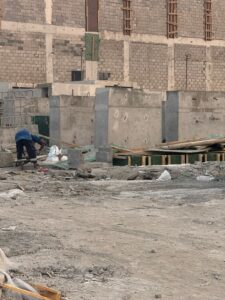
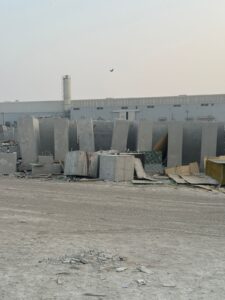
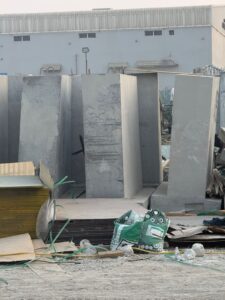
Solid Rock Concrete Works , based in Umm Al Quwain, UAE, manufactures precast concrete box culverts for drainage, road and infrastructure projects throughout the UAE. Culvert sections are produced under controlled factory conditions and engineered to satisfy the hydraulic and structural requirements of each individual crossing.
If your project requires reliable, regulation-compliant precast culvert boxes, contact us to discuss your project specifications and delivery schedule.