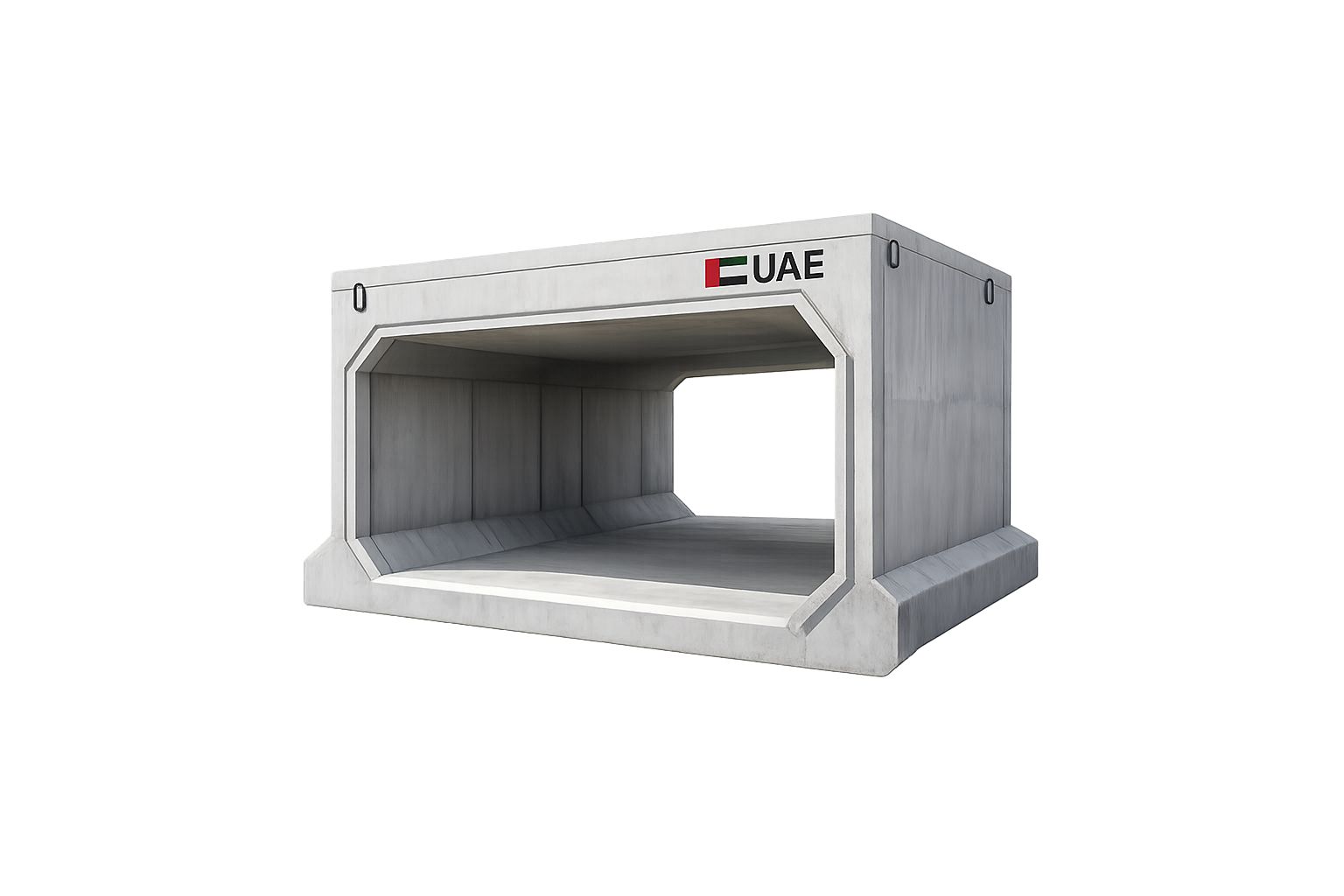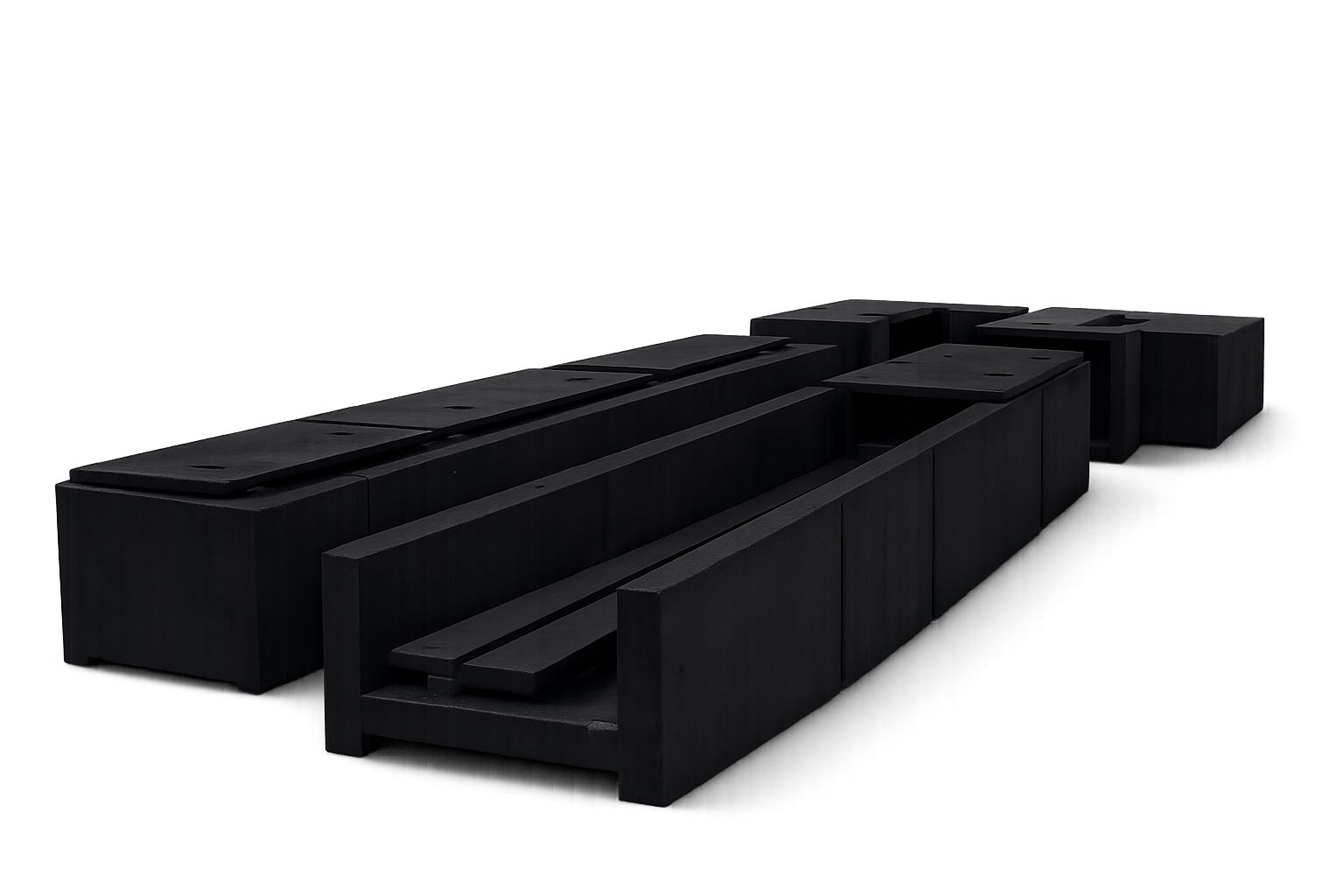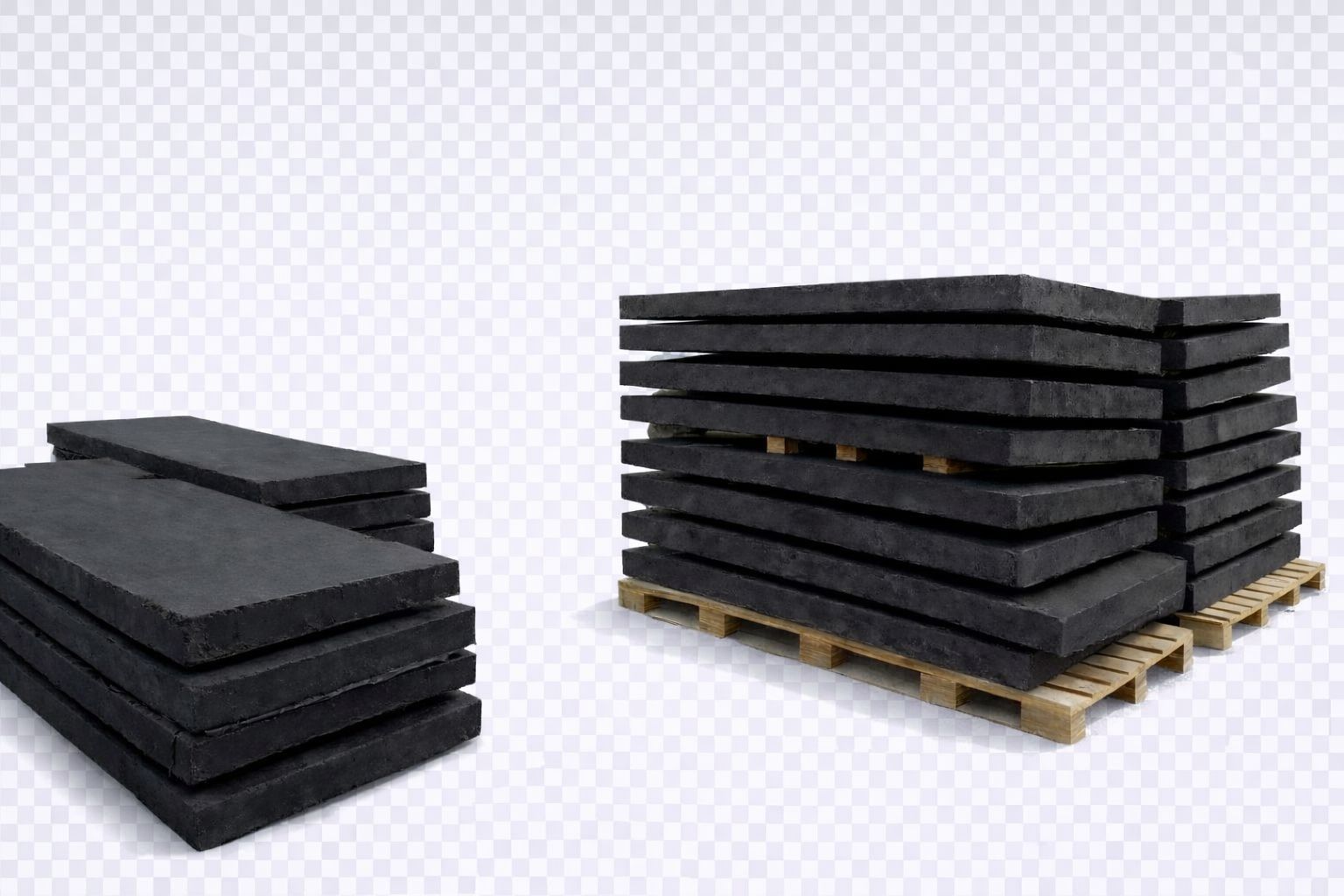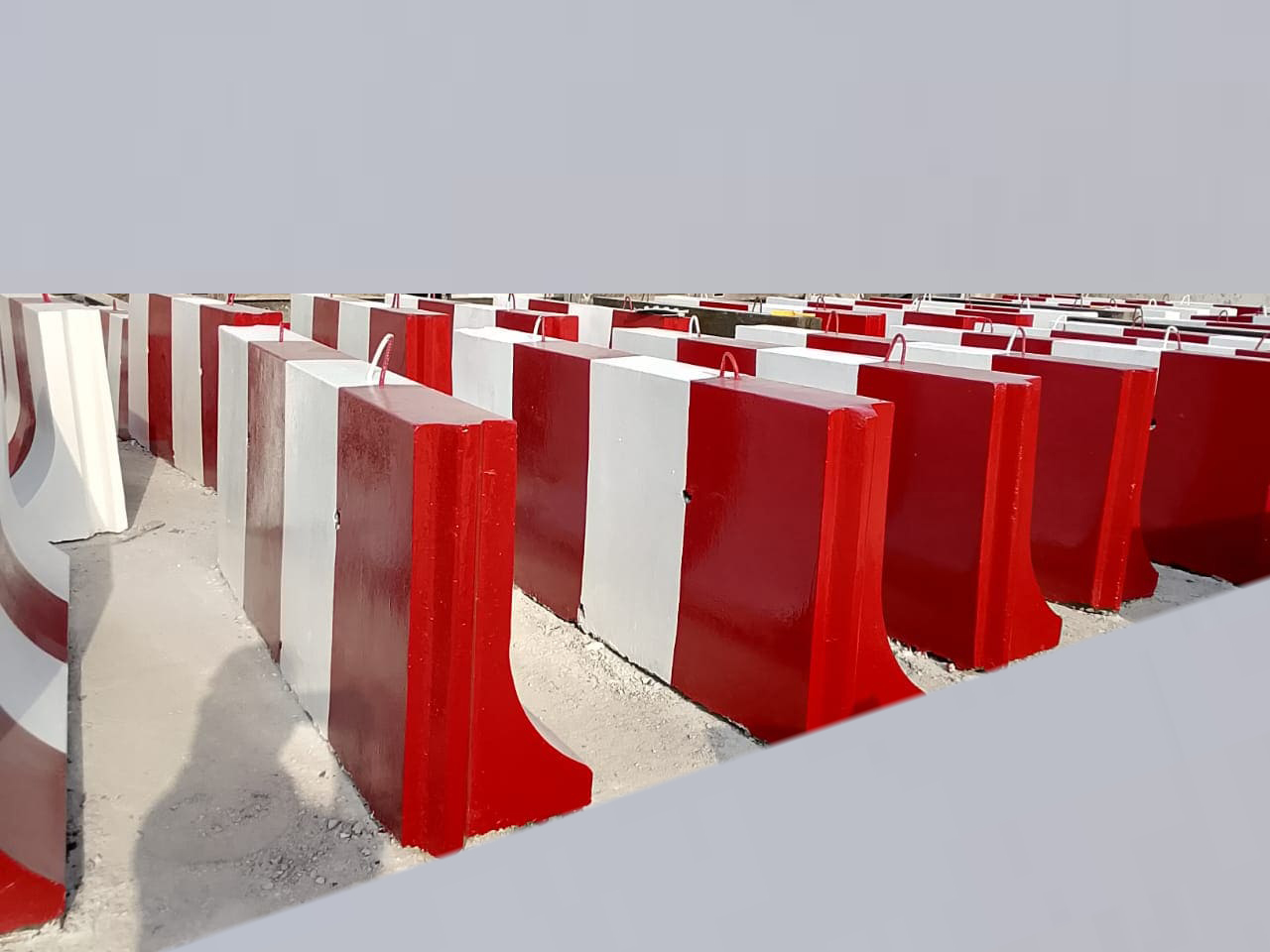

Our commitment to quality and customer satisfaction sets us apart. Whether you’re planning a small project or a large-scale construction, we have the solutions you need.
Transforming landscapes with over 3 years of experience.

Our commitment to quality and customer satisfaction sets us apart. Whether you’re planning a small project or a large-scale construction, we have the solutions you need.


SOLID ROCK CONCRETE WORKS was founded with a clear purpose — to deliver strong, reliable, and precision-engineered precast concrete solutions that simplify construction and add long-term value to every project. With international standards, modern manufacturing practices, and a forward-thinking approach, we partner with contractors, consultants, and developers right from the planning stage to ensure every structure is built smarter, faster, and more cost-effectively. We don’t just supply precast products — we guide, design, and optimize complete precast systems that help avoid delays, reduce unexpected costs, and ensure project success from day one.
You Make It A Home

![]()
CEO of Solid Rock Concrete Work
Deliver high-performance precast systems engineered for durability and safetySupport clients with early-stage planning and technical guidanceProvide customized solutions tailored to each project’s needsMaintain international quality standards and on-time deliveryBuild long-term partnerships through trust, integrity, and reliability
To become a trusted leader in precast concrete solutions, recognized for quality, innovation, and dependable service across the region and beyond.

Walk through any modern city — Dubai, Singapore, London, New York, Shanghai — and there’s a good chance you’re surrounded by precast concrete without even realizing it.
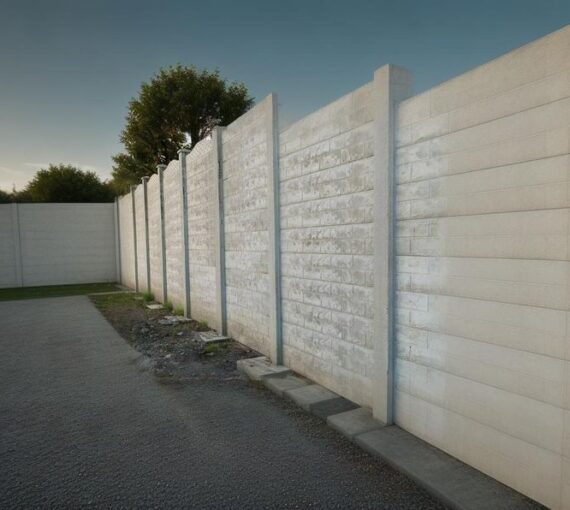
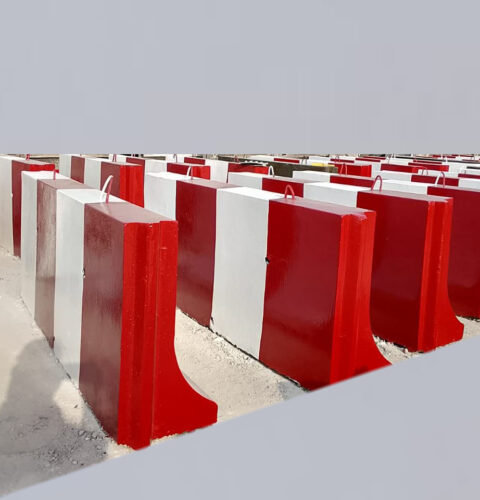
The walls around highways. Bridge beams. Metro stations. Parking structures. Boundary walls. Tunnel segments. Entire apartment buildings. Even stadium seating.
Precast products quietly hold together much of the modern world.
And the reason is simple: construction everywhere is under pressure to build faster, safer, cheaper, and with better quality. Precast solves many of those problems at once.
This guide gives you a complete overview of the precast industry — what precast products are, how the industry started, how it evolved, where it stands today, what products are made around the world, the major advantages, the challenges, and where the future is heading.


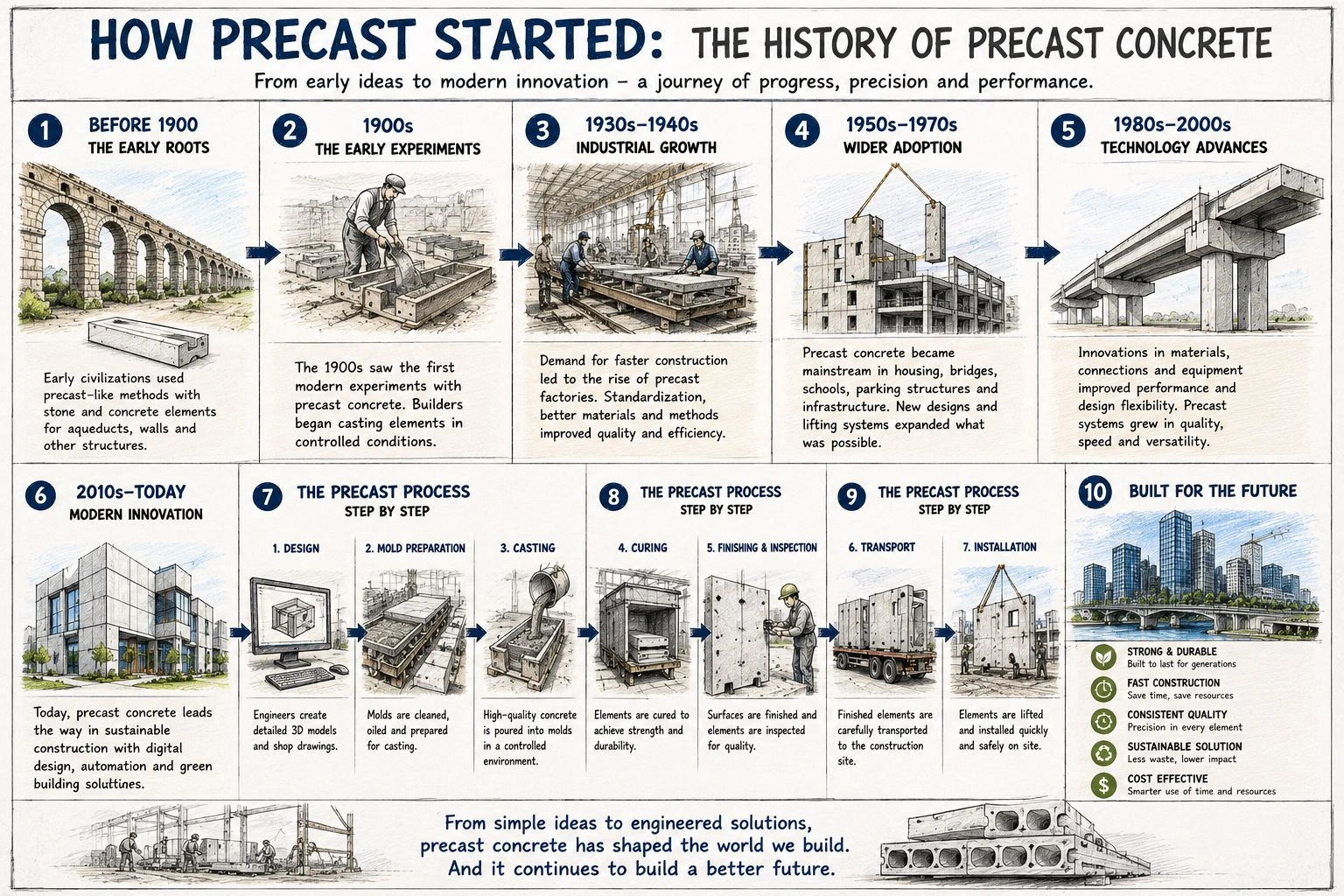
Precast concrete is not new. In fact, the roots go back surprisingly far.
Ancient Roman builders used early forms of molded concrete in aqueducts, tunnels and infrastructure works.
Modern precast construction began developing seriously during the late 19th and early 20th centuries.
One of the earliest modern precast systems was pioneered in Liverpool, England in 1905 by city engineer John Alexander Brodie.
After World War II, Europe faced massive housing shortages. Countries needed a way to build homes quickly and economically. Precast concrete became one of the answers.
Large panel precast systems spread rapidly across:
The United States developed its own precast industry through organizations like the Precast/Prestressed Concrete Institute (PCI) and National Precast Concrete Association (NPCA).
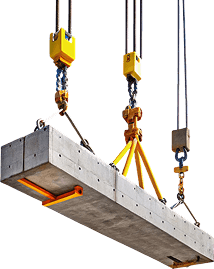
Prestressed concrete technology became another huge breakthrough. Engineers discovered they could place steel under tension inside concrete to improve strength and span capability dramatically.
That innovation changed bridge construction, high-rise buildings, parking structures and infrastructure worldwide.
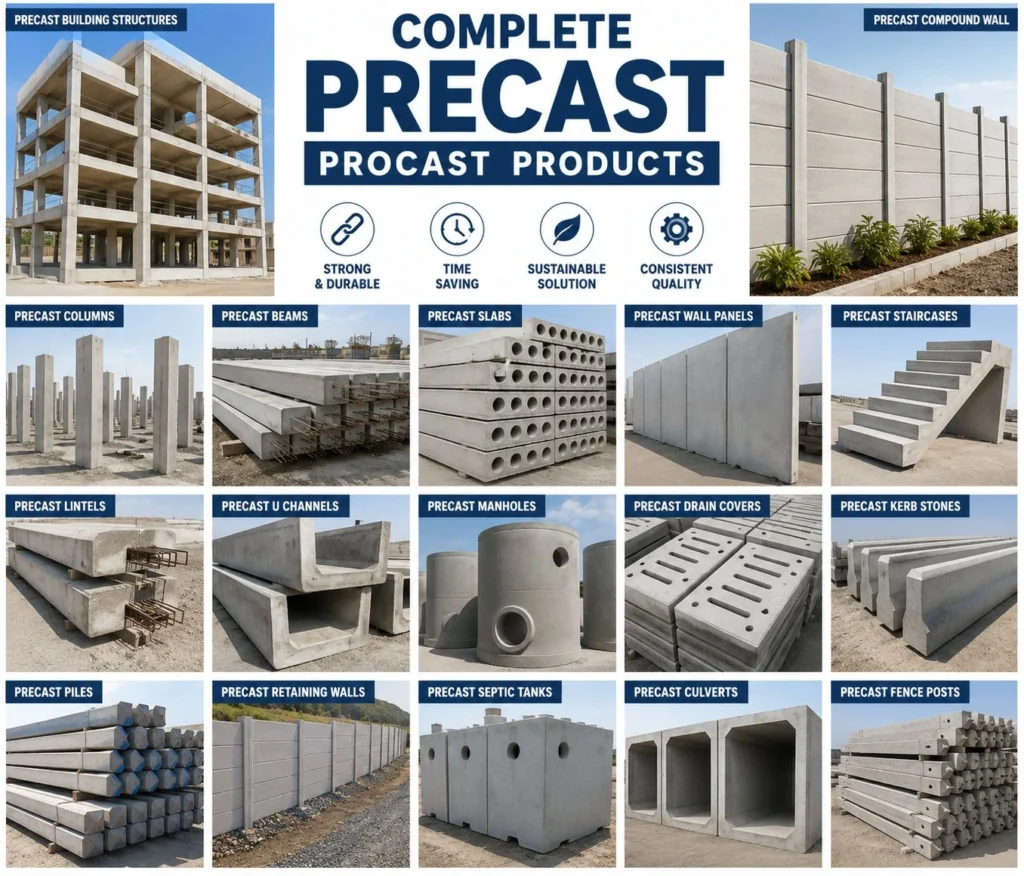
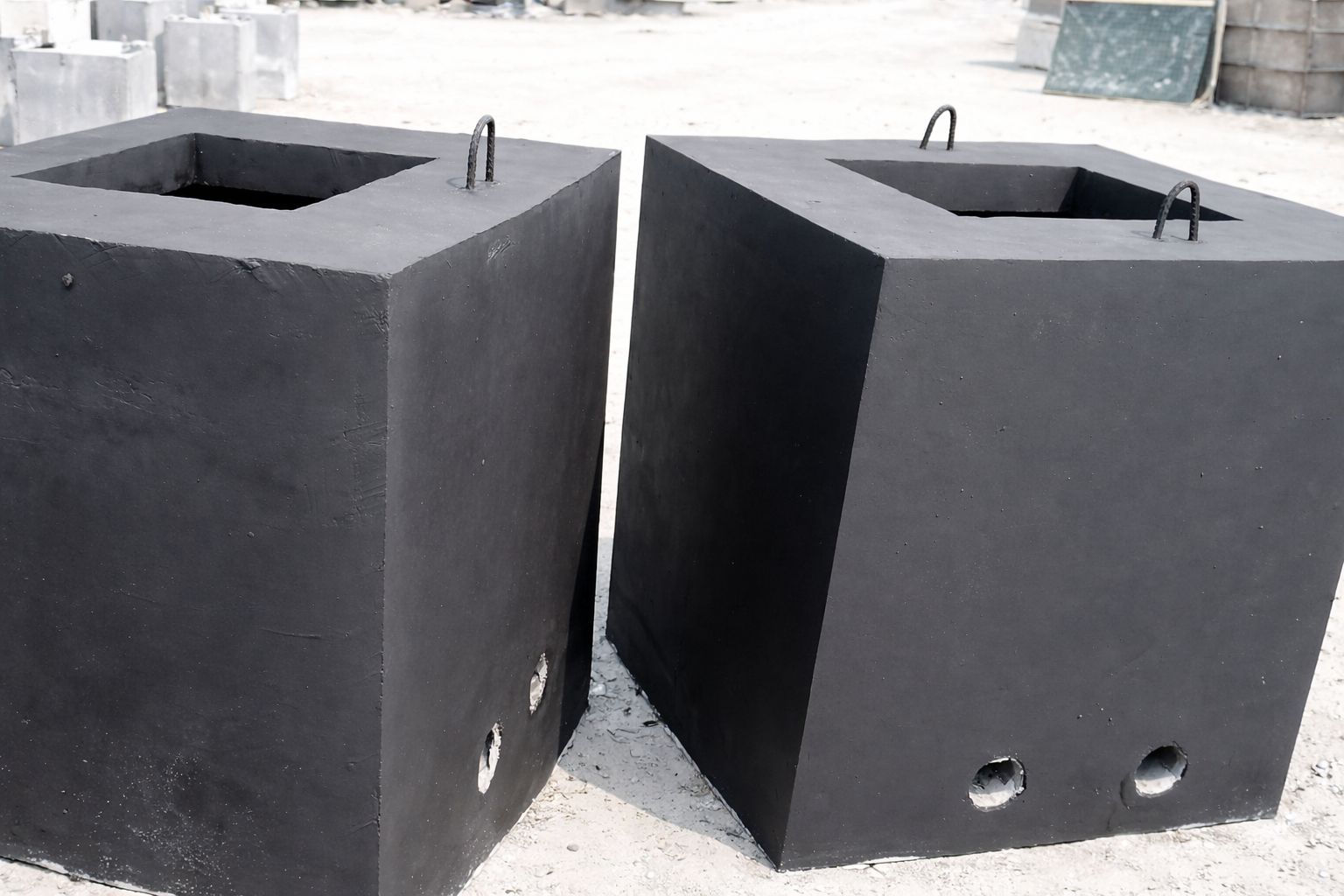
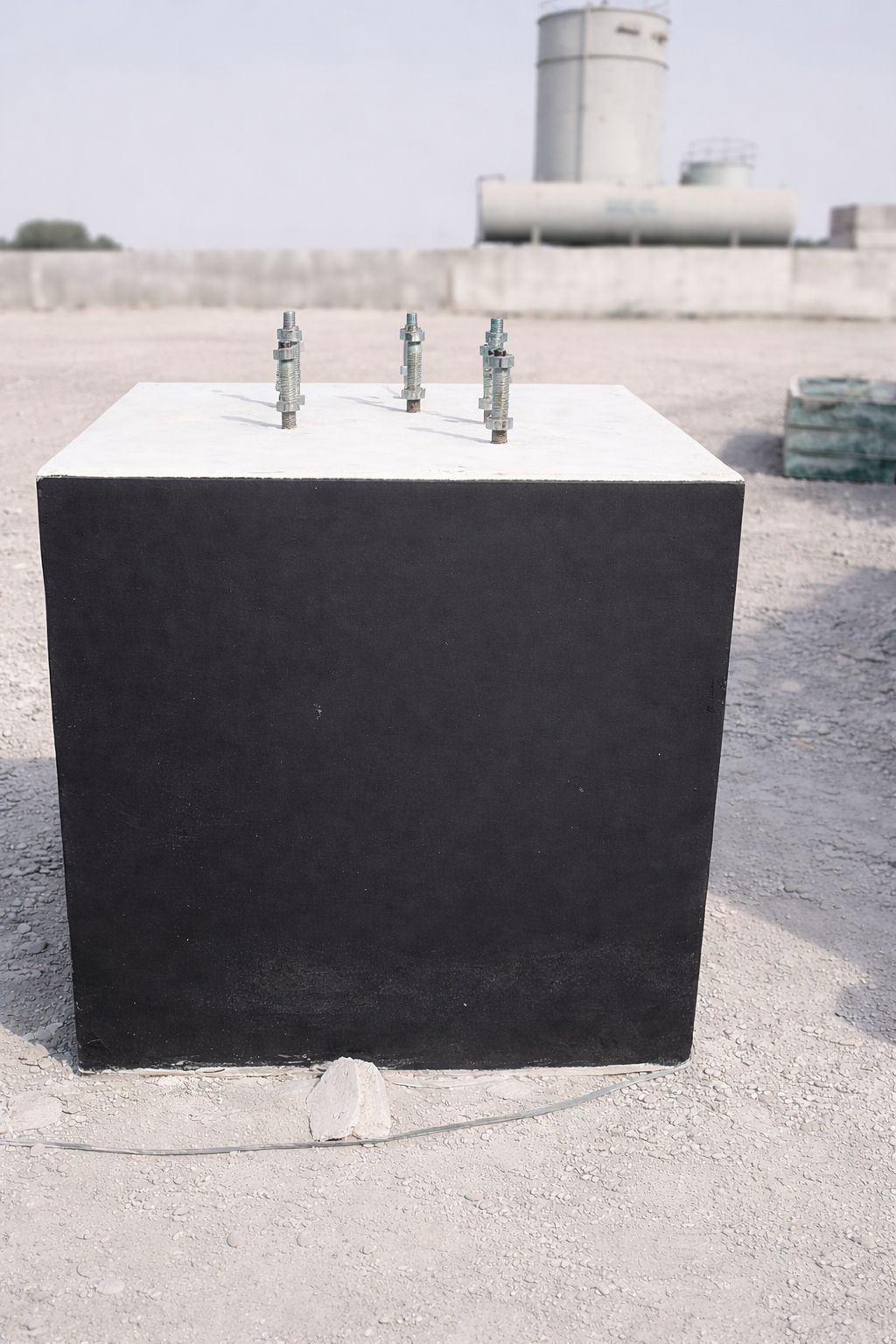
Here are some of the most common categories.
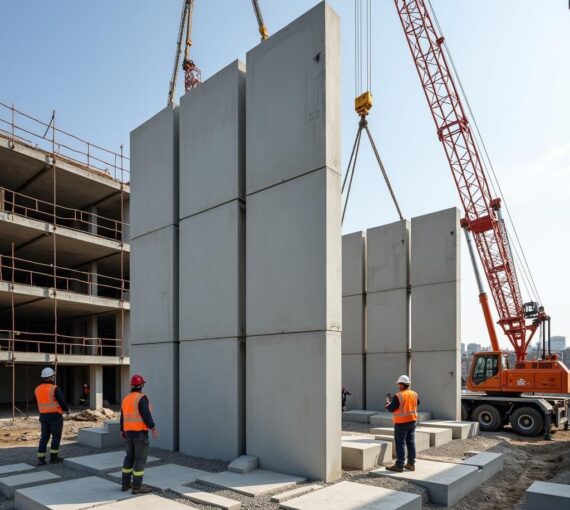
These are the backbone of buildings:
These products are widely used in:
Infrastructure is one of the largest users of precast concrete worldwide.
Products include:
Countries investing heavily in infrastructure — such as UAE, China, India and Saudi Arabia — are major drivers of precast demand.
Architectural precast focuses on appearance as much as structure.
Products include:
These products help architects create complex designs quickly while maintaining consistent quality.
The rise of precast concrete is not accidental.
This is the biggest advantage.
Site preparation and factory production happen at the same time.
While foundations are being built on-site, wall panels and slabs are already being manufactured in factories.
This can reduce project timelines dramatically.
Some reports estimate 40–50% faster completion times compared to traditional methods.
These products are widely used in:
Factory environments allow:
This creates higher consistency than site-poured concrete.
Construction industries worldwide face labour shortages and rising labour costs.
Precast shifts much of the work from site labour to factory production.
That improves productivity and reduces dependency on large on-site labour forces.
Factory production is generally safer than uncontrolled construction sites.
Less work at height.
Less scaffolding.
Less on-site congestion.
Precast supports sustainability in several ways:
Modern plants increasingly focus on low-carbon concrete and recycled materials.
Concrete itself is highly durable.
Properly manufactured precast products can last decades with minimal maintenance.
That is especially important for:
Here are some of the most common categories.
The UAE has become one of the most advanced precast markets globally.
Why?
Precast is used extensively in:
Saudi Arabia’s Vision 2030 projects are also heavily increasing precast demand.
These products are widely used in:
Europe was one of the pioneers of precast systems.
The region strongly emphasizes:
Germany, Scandinavia and Eastern Europe remain major precast users.
The US precast industry is heavily developed in:
Prestressed concrete technology became particularly important in American bridge engineering.
China and India are seeing explosive growth.
The drivers include:
China especially uses precast heavily in large-scale residential developments.


We build multi-family and affordable housing communities, industrial facilities, public and private healthcare facilities, fitness centers and office buildings. We improve the supply chain management process, increase operational efficiencies and build environments that foster creativity.


The industry is moving toward industrialized construction.
Future precast plants will increasingly use:
Factories will become more like automotive production plants.
These products are widely used in:
This is one of the biggest future shifts.
The industry is investing heavily in:
Sustainability is becoming a competitive advantage.
Entire buildings are increasingly being manufactured in sections.
This trend is especially strong in:
Modular precast construction can reduce timelines dramatically.
Building Information Modeling (BIM) is becoming standard.
This allows:
Digital integration is reducing errors and improving efficiency.


Managing Director
Managing Director
Managing Director
Managing Director


Working with new, has been an absolte fame changer for our business from the very first meeting, thei team dem nsdeep understanding

Working with new, has been an absolte fame changer for our business from the very first meeting, thei team dem nsdeep understanding

Working with new, has been an absolte fame changer for our business from the very first meeting, thei team dem nsdeep understanding


GET QUOTATION WITH THE BEST PRICE AND THE BEST QUALITY OF PRECAST PRODUCTS

Mention Umm ul quwain Al raafah sector 5 umm dera area number 2, plot 1353


Our commitment to quality and customer satisfaction sets us apart. Whether you’re planning a small project or a large-scale construction, we have the solutions you need.
Subscribe to our Newsletter and Event right now to be updated