




Floors are not a topic of discussion until they begin to sag. The hollow core slab, a precast slab featuring long voids running through it, is the material that quietly prevents that headache in the high-rise dominated UAE skyline, rather than having a lot of concrete, it has a lot of voids.
A detailed guide on the production line for manufacturing precast concrete hollow core slabs in the UAE as well as the strength provided by prestressing and the crane/lifting operations needed to install the slabs at the construction site.
What is a Hollow Core Slab?
Hollow core slab is a precast concrete plate that has continuous longitudinal voids filled throughout its length and it is prestressed. Those voids reduce the weight of the slab and the amount of concrete used very little while having a minimal impact on the load carrying capacity of the slab, as the concrete close to the neutral axis has little structural contribution.
Hollow core is widely used from the floors of villas to multi-level parking structures, and this is because of the range of spans – 1,200 mm to 22 m depending on the manufacturer.
Why UAE Developers Choose Hollow Core Slabs
That’s the parallel working that ensures fast moving UAE projects stay on schedule and production takes place indoors while groundwork is completed.That parallel working keeps fast-moving UAE projects on schedule and production takes place indoors while the site team are completing the groundwork.
The slabs are also based on actual performance figures, not hype. They usually provide fire resistance of over 2 hours without additional fireproofing and sound transmission class (STC) ratings of 50+ that are highly significant in closely built residential towers.They typically provide flame resistance of more than 2 hours without adding fireproofing and sound transmission class (STC) ratings of 50+ that can be very critical in dense residential towers.
Sustainability also is in their favor. Dubai Municipality, Abu Dhabi Municipality and Estidama, among other authorities, are aware of the fact that less water and cement are used in the dry-mix, shear-compaction production method compared to traditional casting.
Hollow Core Slabs are Manufactured in a Step-by-Step Process
1. Structural Design and Load Calculation
The initial steps in designing such a slab involve determining the loads that the slab will support and then choosing the appropriate void configuration, depth of the void and prestressing strand pattern. Few manufacturers can afford to rush this stage because it makes all the difference to the final product.
3. Blocking and Reducing the Concrete Curing Shrinkage
Hollow core gets its “prestressed” name from the way that the steel is stretched and anchored to the bed on the long-line casting bed, then tensioned, and the concrete is poured over it and compressed when it sets.
3. Extrusion Casting
The slab remains self-supporting immediately after the machine has passed over it as it is compacted on the fly by the high frequency vibration action, and the concrete is zero-slump (dry) when it enters the formwork.As it passes through the formwork, the concrete is compacted on the fly at high frequency, hence the slab will stand up immediately after the machine passes over it and form the internal voids with augers or tubes.
This ongoing operation is really enjoyable to watch and no separate mold necessary for each unit; a fully formed slab profile is created with voids.
4. Curing
After being extruded, the slab cures during the bed and is sometimes steamed to accelerate the process of gaining strength in high-turnover factories. The stable factory conditions prevent fluctuations in temperature and relative humidity that are common on site concrete jobs.
5. Cutting and Strand Release
Once the concrete has reached its design strength, workers use a saw to trim the length of the long slab into ordered lengths while also cutting the tensioned strands. When the strands are cut, they transfer the prestress to the concrete and at this point the slab is structurally “live.”
6. Quality Control and Finishing
Dimensional tolerances, surface finish and camber are inspected prior to the slab leaving the production area for dispatch. A properly extruded slab will have a flat, even top surface and a uniform, flat soffit, with very little additional work required to paint or finish the slab.A good extruded slab will have a flat, even top surface and a flat, even, and uniform soffit, and will be ready for painting or machine-troweled finishing with very little additional work.
The UAE Specific Standards and Capabilities of Manufacturers
The UAE precast sector is not a small scale one, it is really industrial scale. Exeed Precast, for example, has a fully automated pallet circulating system and a factory area of over 200,000 sqm in which hollow core is produced in an annual capacity of approximately 350,000 sqm.Exeed Precast, for instance, has an annual capacity for production of hollow core of approximately 350,000 sqm, in a factory area of more than 400,000 sqm, with a fully automatic pallet circulating system.
Most reputable UAE suppliers are likely to be ISO 9001, 14001 and 45001 certified and factories with oil and gas customers are likely to be certified with ISO 9001, 14001, 45001 and ADNOC compliance.It’s worth checking a supplier’s current certification status directly: Standards compliance in the UAE is not optional paperwork, it’s enforced.
The Installation of Hollow Core Slabs on UAE Construction Sites is a Straightforward Process.
The Site and Structure Must be Prepared
Supporting beams, walls, or columns are tested for cure, alignment and load bearing capacity before delivery. Bearing surfaces are inspected for level, as otherwise they will require shimming in addition.
Crane Lifting
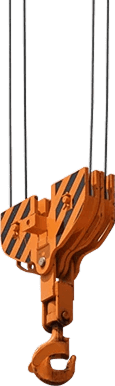
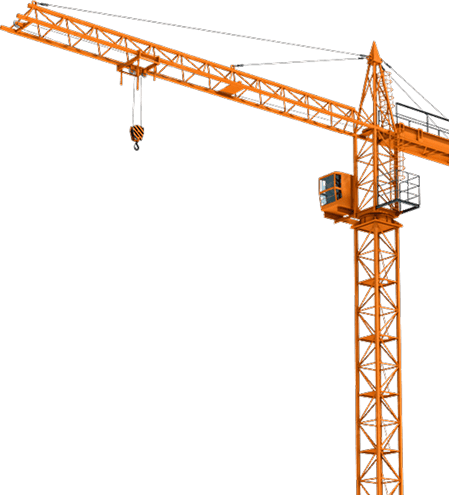
Each slab is picked up by a mobile crane or gantry crane and positioned directly on its final bearing position without having to cut or adjust on site.
Positioning and Grouting
Then, riggers pack each slab snugly against the adjacent slab and crews grout the longitudinal joints between slabs, tying the floor into a single diaphragm. The joint grouting is important structurally as it allows the slabs to transfer loads laterally as a unit instead of as separate planks.
Topping and Finishing
In the UAE, many projects require a thin layer of structural concrete topping over the hollow core floor to enable better load distribution, provide a level surface and embed services. After the topping dries, the next construction phase can be undertaken for the floor.
Handling Openings and Services
Service penetrations such as openings in the slab for ducts or pipe should be coordinated with the contractor during the manufacture of the slab or by approved on-site cutting, in order to avoid cutting into a prestressing strand, which could affect the capacity of the entire slab.Service penetrations, such as openings in the slab for ducts or pipe, should be coordinated with the contractor during slab manufacture or by approved on-site cutting, the latter of which should not be considered a rookie error, as cutting through a prestressing strand could lead to the loss of the slab’s capacity.
Hollow Core Slabs are Used for UAE Construction for Several Benefits
However, the benefits are not limited to speed, as factory production takes place concurrently with site works and erection can take place in a large and repeatable lift,
- Substantial decrease in dead weight: Self-weight is reduced significantly compared with the solid slabs which reduces the load of columns and foundations.
- Spans without internal columns: Spans up to 20+ m ensures more flexibility in floor layouts without internal columns.
- Fire and acoustic resistance: The buildings have built-in resistance to fire and sound insulation, thus eliminating the need for additional treatments.
- Weather independence: Erection is independent of weather as it can be done in almost any weather as curing is completed in factory.
Common Challenges and How Contractors Overcome Them
It is important to coordinate bearing tolerances between the precast shop drawings and the structural frame on the site to get things right. UAE contractors do this by securing slab design drawings at an early stage, prior to the casting of any supporting beams or walls.
Local penetrations can also pose problems for inexperienced groups if they do not consider penetrations in the casting process. The solution is simple: hire the MEP consultant at the design phase, rather than during the installation of the finished floor, so that duct and pipe routing are planned for in the design.
Final Thoughts on
Hollow core slabs make the construction of floors a factory precision/site speed process, precisely what the UAE construction timelines require. Whether long-line prestressing beds or crane-placed erection, each step eliminates the element of guesswork on-site for precise, repeatable manufacturing.
The lesson for developers and contractors is as follows: opt for the UAE manufacturer who is certified, finalize slab layouts and service penetrations early on, and let the factory-to-crane process do what it does best — build floors quickly and withstand decades of usage.