



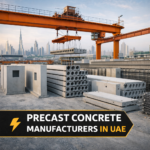
The concrete columns are usually not given any recognition. They support entire towers, malls and car parks and nobody ever takes a selfie with them. Precast concrete columns are the silent workhorses in the UAE where construction projects seem to keep the pace, especially when it comes to keeping to schedule for the megaprojects.
This guide provides in-depth information regarding the production and installation process of precast concrete columns, from the factory floor to the final lift on site in the UAE. No frills, no guesstimates — the true process supported by the real standards that govern it here.
What is Precast Concrete Column?
A precast concrete column is a concrete column which is cast and cured in the factory, and then transported to the construction site for installation. This is not a cast-in-place column that is poured on site, dust storms and all.
All the production is carried out under the artificially controlled conditions of the manufacturing room, as the casting is an indoor operation; the temperature, the composition and the curing conditions are all under manufacturers’ control in the process of casting. In the UAE it is a significant factor; and when the summer site temperatures in the UAE are oppressive, it can ruin a concrete pour even before it sets if it is not managed carefully.
The UAE Contractors are Engaged in the Pre Cast Columns as They Know the Need for It
The UAE construction market is a fast-paced one and precast is the product that cuts down on the hassle. Site work is carried out concurrently with factory manufacture, and can achieve substantial reduction of construction time compared to the cast-in-place construction method.<sup>[1]</sup>
Additionally, with precast columns delivered ready to install, the number of workers on site is reduced, which not only reduces safety hazards, but also reduces the clutter on the site.Fewer workers on site also reduces the hazards on the jobsite, along with the amount of scaffolding and the mess on the jobsite as a whole.
There’s also a climate factor. Every summer in UAE, temperatures soar into the upper 40s and heat is concrete’s silent foe, it hastens the setting process and decreases long-term strength if not handled properly. This is not the case in factory controlled casting because the manufacturing is done indoors and under stable conditions.
Step-by-Step: Manufacturing Precast Concrete Columns
2. Design and Structural Analysis
Each precast column begins with a drawing, and does not actually begin with a mold. The column is sizing and then the reinforcement and the grade of the concrete is sized based on the loading needed to be carried by the column.
These drawings need to be created by a licensed Structural Engineer and go through the Dubai Municipality’s Buildings Regulation and Permits Agency prior to production; it is not an option, it is a requirement.
2. Mold Fabrication
When the design has been solidified, it is the technicians responsibility to create or choose the mold, which is typically constructed of steel for its strength and precision. The number of times the steel mold can be used is hundreds of times, and the production cost is low, the accuracy is tight.
In addition to the size of the column, the mold will determine the finish on the surface of the column as well, which is a big help in the grinding and patching departments later.
3. Reinforcement Cage Placement
A steel reinforcement cage (steel rebar or welded mesh) is assembled and placed in the mold. This cage is responsible for the tensile strength of this column as concrete itself can easily resist compression, but not tension.
Spacers also ensure that the column is installed in the middle of the cage so that it receives uniform coverage with concrete, and is free of steel corrosion later.
4. Works on Concrete Mixing and Pouring
The cement, aggregates, water and admixtures are mixed in the batching plant until the required cement strength grade is achieved, which is typically between C30 and C60 in the UAE, and the mix is poured into the mold around the reinforcement cage.
Adjusting the temperature of the concrete placed is a critical step in the process of which UAE regulations have specific restrictions: DMS 026 stipulates that the temperature of the placed concrete cannot exceed 35°C, and concrete plants employ strategies such as adding flaked ice to the mix water or chilling the aggregates to ensure compliance with the standard.
5. Compaction and Curing
Trapped air pockets are eliminated from the fresh concrete by means of vibration equipment because the air pockets will form weak spots that no one wants inside a load bearing column. After compaction, the column is allowed to cure for a period of days under controlled temperature and humidity conditions, until it achieves the desired strength.
Some factories speed this up with steam curing, which shortens turnaround without compromising quality.
6. Quality Testing and Demolding
Concrete cube samples are tested for compressive strength, and columns are measured before they leave the factory for dimensional tolerances. Only columns that pass get demolded and moved to the storage yard.
The whole production process is under a formal compliance system in Dubai. There is no excuse for contractors to supply precast concrete from a factory that doesn’t have a Certificate of Conformity from Dubai Central Laboratory as all factories are required to have one, as per Administrative Decision No. 316, 2012.Every precast concrete factory is required to have a Certificate of Conformity from Dubai Central Laboratory before its products can be used on a project, so there is no excuse for contractors to buy precast concrete from a factory that hasn’t been certified by Dubai Central Laboratory, as per Administrative Decision No. 316, 2012.
Transportation of Precast Columns to the Site
After healing and inspection columns are transported to the construction site on flatbed trailers. Logistics planners create routes while taking into account load limitations, bridge clearances, and even, in the UAE, permits for oversized loads.
The columns are padded and secured to prevent chipping or cracking when they are sent out on the road, since a hairline crack that appears in transit turns into a costly rejection at the site gate.
Precast Concrete Columns Installation in UAE Construction Sites
Site Preparation
Site team checks foundation readiness, soil bearing capacity and confirms crane access before first column arrives. This is how such projects end up with a very expensive column on a truck with nowhere to go!
Maneuvering Cranes and Positioning.Crane Lifting and Positioning
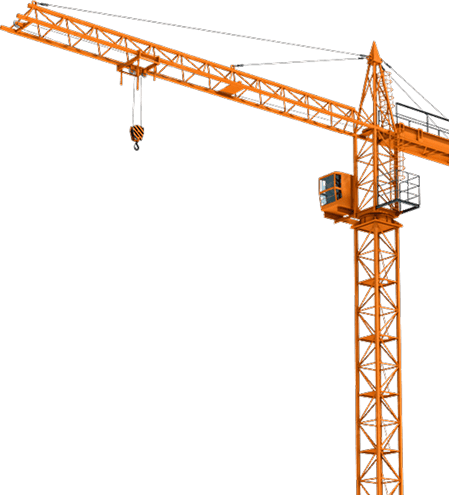
Each of the columns is picked up by a mobile or tower crane at specific lifting points, which were cast into the concrete during its construction. The column is positioned by taglines, as a swinging multi-ton column is not a thing anyone would like to freestyle.
The crew lowers the column into the position onto base plates or foundation sockets with surveyed reference points.
Alignment, Bracing, and Grouting
After the column is in place, temporary props or braces are used to keep the column plumb during curing. To ensure vertical alignment, surveyors use laser levels or theodolites; even a slight tilt at the base will compound to a substantial lean further up the structure.
Grout fills the space between the column base and the foundation, thereby securely connecting the two and transferring the load correctly.
Final Inspection
Once the grout has hardened and the braces are removed, engineers check the column for alignment, integrity of the connections, and the surface condition of the column. Once this sign-off is achieved the column becomes structurally live and is considered part of the building.
Benefits of Precast Columns for UAE Construction
On large, repetitive projects such as cores for high-rise buildings, parking structures and warehouses, precast construction really shines. For instance, the multi-story car park at the Dragon Mart extension is almost entirely made up of precast beams, columns, and hollow-core slabs.For example, the precast beams, columns and hollow-core slabs are used in nearly the entire multi-story car park at the Dragon Mart extension. <sup>[3]</sup>
In addition to speed, precast columns offer:
- Predictable strength: factory manufactured under consistent quality: tight tolerances.
- Less site waste: Casting away from site can significantly reduce material waste, as compared to casting on site.
- Improved safety: With fewer forms and wet concrete on site, there are fewer chances for accidents.
- Heat resistance: A column will not be affected by the UAE heat, if already cured in a factory.
Familiar Problems for Contractors (and How They Deal with Them)
There are some things about precast that aren’t all that easy. Oversized columns are not always easy to maneuver on narrow UAE roads and can be timed to avoid the restrictions during the day, therefore, deliveries are sometimes made at night.
The detail of the connection is also important as a poorly detailed base connection destroys the structural benefit of precast. The solution comes from experienced UAE contractors who do this by engaging with structural engineers at the outset when mold fabrication begins, rather than after columns are cast.
Final Thoughts on Precast Concrete Columns
The most time consuming and weather dependent job in construction is now a controlled and repeatable factory operation with precast concrete columns. With deadlines so close and a lack of mercy from the sun in the UAE, that control means faster, safer and more predictable builds in the UAE!
It’s easy to see that precast is a viable solution – whether you’re a contractor sourcing columns or a developer wanting to understand your project timeline, the only thing’s that’s not up for debate is that precast works because it takes the unpredictable elements of concrete construction off-site and lets the site crew do their job of lifting and aligning the precast concrete.