




Enter any contemporary building project in the UAE and all you will see is that speed is an issue. Time is of the essence, standards are high, and time wasted is costly. And this is precisely where precast flat slab construction UAE comes and silently addresses issues that traditional building usually finds dilemmas with.
Flat slabs might not seem dramatic. They consist merely of horizontal concrete components with no beams, which hold the floors and ceilings. Behind this simplicity however is a potent blend of engineering effectiveness, speed, and cost management.
Then why are developers and contractors in the UAE moving towards precast flat slabs? We should get it down to reason, facts, and real world knowledge.
What does Precast Flat Slab Construction UAE mean?
The precast flat slab construction is a manufacturing process that entails the production of concrete slabs in a controlled factory setting and then transferred to the site where they are installed.
Precast slabs are unlike traditional cast-in-place slabs, which are:
- Manufactured in regulated circumstances.
- Scheduled to work steadily.
- Installed quickly on-site
The National Precast Concrete Association points out that the factory production enhances quality performance and the variability in concrete performance. It is nothing but the reason why precast systems are becoming popular around the world.
The reason behind the popularity of Precast Flat Slabs in UAE
The UAE construction scenario is special. It demands:
- Fast project delivery
- High structural reliability
- Extreme temperature changes.
The precast flat slab construction is ideal in such an environment. It is fast and powerful–a quality that any project manager would love.
And frankly speaking, time-saving and less-headache on-site should be mentioned.
1. Faster Construction Speed
Time is money in construction. Precast flat slabs save a lot of time in projects.
Since slabs are manufactured off-site:
- Slab production and site preparation are in parallel.
- Installation is fast and efficient.
This is a parallel workflow that reduces the construction time.
The American Concrete Institute emphasizes the fact that prefabrication enhances construction efficiency as it minimizes on-site delays.
Simply put, less waiting, more building.
2. Reliable Quality and Precision
Uniqueness in production is guaranteed by factory production.
Precast slabs have the advantage over site casting, where weather and human error may cause variations in results, in that:
- Controlled curing conditions
- Accurate mix design
- Standardized processes
The Portland Cement Association attests the controlled curing enhances concrete strength and durability.
Uniformity is not merely an advantage–it is a requirement in the present day construction.
3. Reduced On-Site Labor
Some of the typical challenges in the UAE are labor shortages and the increasing cost.
Precast flat slab construction will minimize reliance on onsite labor since:
- Majority of the work occurs in the factories.
- Smaller teams are required during installation.
This leads to:
- Lower labor costs
- Fewer on-site errors
- Better project control
When there is less chaos on-site, it normally translates to better results.
4. Improved Structural Efficiency
Flat slabs do not need beams, thus producing:
- More usable space
- Flexible interior layouts
- Better architectural freedom
These slabs are designed by engineers to direct loads to columns.
This improves:
- Load transfer efficiency
- Structural simplicity
The American Concrete Institute states that properly designed flat slab systems are efficient in the distribution of loads.
5. Economic Savings in the Long Run
Preadcast systems might initially appear costly. But look deeper.
Precast flat slabs save costs by:
- Faster project completion
- Lower labor expenses
- Reduced material wastage
These savings accumulate over building lifecycle.
The American Society of Civil Engineers stresses that sustainable building practices lower the lifecycle cost, and enhance the value over time.
When it comes to construction, smart expenditures are better than cheap ones.
6. More Durability and Strength
Precast flat slabs are constructed to be durable.
Controlled manufacturing ensures:
- Proper mix ratios
- Optimal curing
- Strong reinforcement
These factors improve:
- Resistance to cracking
- Long-term durability
- Structural reliability
Durability is no luxury in the harsh climate of the UAE, it is a necessity.
7. Appropriate to the UAE Climate Conditions
The UAE has environmental issues like:
- High temperatures
- Sandy conditions
- Rapid urban development
Precast flat slab construction will work well under these conditions since:
- Extreme site temperatures are avoided with factory curing.
- Good materials are not prone to environmental stress.
This renders precast a perfect choice as far as regional construction requirements are concerned.
8. Faster Project Turnaround
The UAE developers tend to have tight deadlines.
Precast flat slabs are advantageous as they assist in:
- Reducing construction time
- Minimizing delays
- Improving scheduling efficiency
The projects are completed quicker, which implies:
- Earlier occupancy
- Quick payback period.
And that makes all happy–contractors and clients.
9. Reduced Construction Waste
The construction industry is becoming environmentally friendly.
Precast systems create less waste as:
- Materials are measured accurately in factories
- Wastes of concrete are reduced.
The National Precast Concrete Association claims that precast production minimizes wastage of materials in comparison to the conventional construction techniques.
Reduced waste translates to cleaner places and improved environment.
10.Better Safety on-site
Construction sites may be hazardous places.
Premade flat slab construction enhances safety by:
- Reducing on-site work
- Minimizing manual handling
- Reducing the exposure to risks.
There are usually fewer activities on-site, which implies fewer accidents.
11. Flexibility in Design
Flat slabs are architecturally flexible.
Without beams:
- Ceilings appear cleaner
- Space planning is made simpler.
- It becomes easier to make changes.
This is particularly beneficial in commercial and residential projects.
12. Ease of Installation
Precast slabs are constructed to be installed easily.
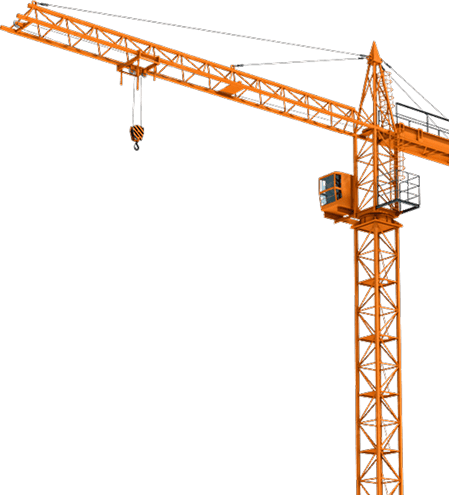
With cranes and lifting devices, workers will be able to:
- Position slabs accurately
- Complete installations efficiently
This saves time and makes the construction less complex.
Some of the myths related to precast flat slabs
Let’s clear some myths.
“Precast is expensive”
It can be costly in the short run, but money saving in the long run.
“It limits design”
As a matter of fact, it is more flexible when it is planned well.
Less durable, it is;
It is frequently more resilient than traditional productions which are controlled by a factory.
In What Situations should Precast Flat Slabs be used?
Precast flat slab construction UAE is ideal in:
- Commercial buildings
- Residential complexes
- Parking structures
- Industrial facilities
It is best in cases where speed, quality, and efficiency are key factors.
Final Thoughts
Precast flat slabs may be simple looking but their advantages are high.
They offer:
- Speed
- Consistency
- Durability
- Cost efficiency
Properly applied, they revolutionize construction operations and enhance project performance.
Select the appropriate manufacturer, adhere to the proper design standards, and make sure the installation is correct.
Do so, and your edifice will be a decade or two.
And frankly, anything which hastens up building without interfering with quality, is worthy of a standing ovation–even a slab.