



Precast Manholes in the UAE: Sizes, Types & DM Approval — A Complete Guide offers a comprehensive overview of precast manholes, their dimensions, types, and approval by DM in the UAE.
Have you ever driven through Dubai and wondered how the city’s underground infrastructure keeps humming without any noise? That’s because it’s mostly beneath your feet. Precast manholes make an essential part of the network of the sewerage, storm water and utility systems in the UAE. They’re not glamorous. No one posts them on Instagram. However, as you can imagine, it’s a really messy business to try to create a modern city without them.
This guide covers all you need to know about precast manholes in UAE, including what they are, the different types of precast manholes, the standard sizes, and the Dubai Municipality (DM) approval process. From project managers, civil engineers to contractors looking for ways to prevent expensive delays, it is for them.
What is a Precast Manhole UAE?
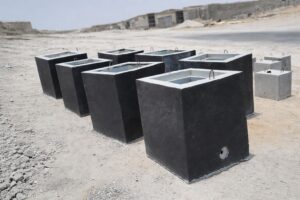
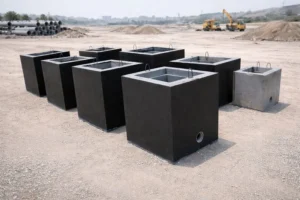
A precast manhole is a manhole that is casted in a prefabricated manner in a controlled environment in a factory and delivered to the construction site ready for installation. Cast-in-situ manholes involve formwork, concrete pouring, and long curing times whereas precast manholes come ready to install.
The benefits are quite apparent, says the UAE-based precast supplier Solid Rock Concrete Works: Contractors can immediately backfill, ensuring the project is on schedule and quality is not compromised. When every minute means a dollar on a UAE construction site, it matters.
Precast manholes provide several functions in the underground environment: maintenance access points for sewer pipe, stormwater control, cable shelters for telecom and utilities and pipe connections at pipe junctions.
Why Precast Manholes Dominate UAE Construction
Government initiatives in areas like airports, bridges, highways, and smart city projects have resulted in a marked increase in the demand for precast concrete solutions in the UAE, while manufacturers are increasingly implementing sustainable measures to meet the UAE’s carbon reduction targets.
To this end, precast concrete makes sense for the following reasons:
Speed
The casting speed at the factory is much quicker than site casting. A manhole can be fabricated as the trench is being dug.
Quality Control
The manufacturing process takes place in a controlled environment which minimizes the problem of defects due to weather conditions, poor mixing or poor curing; which are all realities of the UAE’s extreme heat.
Consistency
All units produced are the same specification. No variation in pours.
Contractors can gain from faster building times, greater durability, and reduced maintenance prices by selecting precast over conventional strategies, according to the leading precast suppliers in the UAE.According to the leading precast suppliers in the UAE, there are some advantages to using precast over conventional techniques, such as faster construction times, durability, and reduced maintenance expenses.
According to the Standards, the Types of Manholes in Dubai Municipality are as Follows:
Dubai Municipality’s Drainage and Irrigation Department (DID) has released comprehensive Standard Details for Sewerage and Drainage Construction. The DM standards specify the various types of manholes, including their plan, cross section and structural reinforcement requirements — not suggestions.
The following is a summary of the common applications found in sewerage and stormwater:
Type Special
For large, complicated junction points where standard types are not suitable. Must have complete structural drawings and DM validation at design time.
Type A
An ordinary sewerage manhole for pipe diameters small and depths shallow. The most common in residential uses and commercial use is this as the workhorse of the system.
Type B
For intermediate pipe diameters and depths. In plan view, this type of pipe is shown in multiple cross-sections in the DM standards.
Type C and D
Used in larger pipe sizes and at greater depths of infrastructure. These generally occur in the main sewer and stormwater systems for high flow areas.
In relation to storm water drainage, DM drawings include separate details of the manhole such as waterproof tanking membranes (Cetal-705), structural reinforcement using epoxy-coated steel and the internal epoxy paint coating of all exposed concrete surfaces.
Every detail is standard, and attention is given to waterproofing and corrosion protection.
Precast Manholes Come in a Variety of Standard Sizes and Specifications, Depending on the UAE Standards
The standard precast concrete manhole specifications – ASTM C478 – are referenced throughout the precast industry for precast manhole sections for use in precast sewer, drainage, and water works and are adopted to meet the DM requirements.
Common diameters of circular manholes for UAE projects are:
- 600 mm to 900 mm — These chambers are designed for small inspection chambers and residential connections.
- 1000 mm to 1200 mm — Standard sewerage manholes (as per the DM drawings, a common configuration is 1000 mm diameter clear opening).
- Above 1500 mm — Larger junction and stormwater manholes with high flow volumes.
DM drawings include the pipe diameter ranges directly related to manhole type selection.
For instance, Type J manholes are capable of handling pipe diameters of 200mm to 600mm, and larger sizes can be used to accommodate pipe diameters in between 700mm and 900mm.
These are not arbitrary numbers, they are load and structural calculations embedded in the standard and are based on depth from the top of the cover to the outlet pipe soffit.
JRC series manholes, JRC-4, JRC-12, JRC-14, are precast concrete units conforming to certain dimensional specifications for cable and equipment housing for telecom and utility applications.
The DM Approval Process: Fact or Fiction?
Local Order No. (8) of 2002 Concerning Sewerage, Irrigation, and Water Drainage in the Emirate of Dubai clearly stipulates that no person is allowed to open, fill, cover or conceal any manhole or inspection chamber of the public sewerage network, or erect any structure which may impair the safety or obstruct the maintenance of the sewerage network, without proper authorization.
In actuality, precast manholes for DM approval are subject to multiple layers:
Design Approval
Your design should be prepared by qualified engineers who are familiar with DM’s standard details. In the event of a conflict between legislation and standards, the latter will take precedence.
This is not a one-off submission of a project — all connection points must be approved by DM, and stub pipes need to be added in selected manholes for the future extension of the system.
Building System Approval
Dubai Municipality has stated that building systems will be approved by DM and all contractors and consultants are responsible to ensure building systems are approved.
Interested parties can apply online via the Dubai Building Permits System (Dubai BPS) or via e-mail to bsa@dm.gov.ae.
Laboratory Testing
The DM-DCLD is responsible for certifying products and collaborates with other regulatory departments, with reference to international and regional standards, to create Technical Guides and ensure suitability in the local environment.
The concrete mix design, reinforcement specification, waterproofing system and cover frame classes are all under examination.
Compliance requirements for all heavy duty Class A cover and frame requirements, 50mm concrete haunching thickness and 3 coats of epoxy paint for all internal exposed surfaces are detailed in the DM standard, rather than being recommended.
Common Errors Which Result in DM Rejection
These are all things that experienced contractors are aware of.
The following are the most frequently cited causes for a precast manhole installation to fail DM inspection and/or approval:
Using Non-Approved Products
If the precast unit or cover frame aren’t on DM’s approved list, the project stops.
Ensure product approvals are checked prior to, not after, purchasing.
Incorrect Depth-to-Type Matching
If the pipe depth requires Type B, then using Type A when the pipe needs to be Type B is a drawing mistake and is discovered at the review stage — and once it is cast in concrete, it will be costly to change.
Missing Waterproofing Details
DM is particular about waterproof tanking membranes and epoxy coatings.
If any of these are not included in the as-built, it will be rejected.
Inadequate Structural Reinforcement
Epoxy coated steel reinforcement and grade requirements are detailed in the DMs.
It is not possible to substitute any materials without first obtaining permission from DM.
If You Are Interested in the Practical Work of Working with DM, Click Here
Dubai Municipality is indeed one of the more transparent municipal authorities in the region regarding technical standards.
Once engineers take the time to read the sewerage guidelines, a cover page and read them, they realize the requirements are systematic and logical.
The problem is that the rules aren’t unreasonable.
The problem is that the detail is quite comprehensive and there needs to be coordination taking place, between the design consultant, the contractor and the precast manufacturer at an early stage.
Most delays are due to changes in the type or size of manhole done at the last moment during construction.
If you are in the early stages of a project, please download the DM Sewerage Design Guidelines (updated January 2025) and the Standard Details for Sewerage and Drainage Construction directly from the DM website.
It is not this article, nor a supplier’s brochure, it is them!
Final Thoughts on Precast Manholes in the UAE
Precast manholes in UAE may be out of sight under roads, pavements and landscaped areas but they’re the backbone of the functioning of the cities.
Precast is the obvious solution for almost every sewerage and drainage project in the Emirates, because of the detail of the technical standards, the level of maturity of the precast manufacturing industry and the construction industry’s appreciation for efficiency.
It’s a very good practice to understand the types, sizes and the process of approval before breaking ground.
It makes the difference between a project moving and not moving in Dubai.