


The safety of every commuter depends on the kind of barrier utilized to ensure vehicles remain in line when a highway is used to enter a curve, a hill or even a roadside construction area. Concrete road barriers are a common feature of the modern traffic control system in the last decade and they have replaced much of the older systems. We will discuss the benefits of concrete barriers on roads, their functionality in a real-life situation, and why they make a good investment to cities, states, and even individual developers.
Concrete Road Barriers What are Concrete Road Barriers?
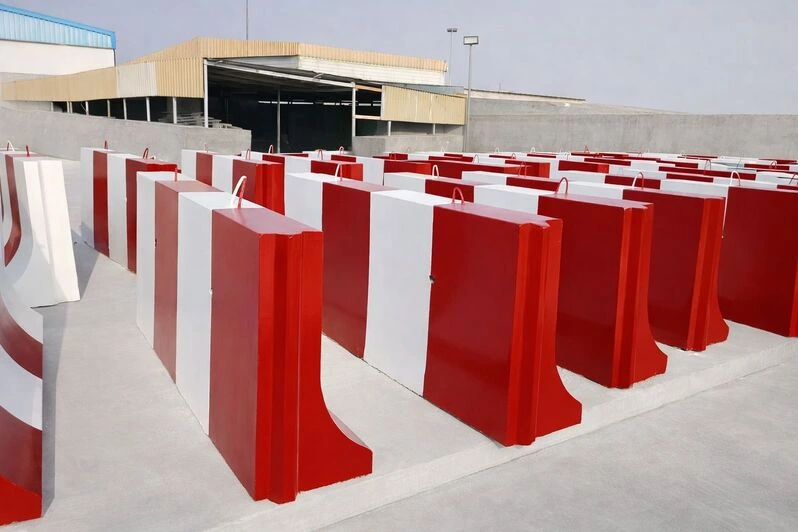
Concrete road barriers, also known as concrete guardrails, are constructed roads comprising of reinforced concrete, or precast panels. They are made to take the energy of the impact, redirect cars, and protect the roadside properties, which can be in the form of guardrails, drainage, or emergency services.
Types of Concrete Barriers
Pre-cast concrete guardrail systems: Assemblable modular panels.
Reinforced concrete concrete barriers/cast in place– These are monolithic and cast in place, which gives them the feel of long stretches.
Concrete curb extensions: Small extensions that are raised and narrow but which move vehicles back into the lane.
The main similarity of each type is that they all have these characteristics; durability, strength and low maintenance. The selection will be made based on the size, cost, and aesthetics of the project.
Best Benefits of Concrete Barriers on Roads.
We dissect below the reasons why concrete barriers are always superior compared to alternatives in terms of safety, economics and design.
1. High Quality and Low Maintenance.
The fact that concrete can withstand the effects of weather, corrosion and wear implies that barriers require a relatively long life of 30-40 years without requiring much maintenance. Some of the common maintenance procedures are:
Periodic surface cleaning
Application of sealants or repaint after every 710 years.
Checking or rivet/joint inspection after every 5 years.
Conversely, steel guardrails will rust in 10-15 years depending on whether they are coated or not which results in more costs of replacement that are multiples of the initial investment.
2. Increased Safety and Crash Performance.
The concrete walls are developed to absorb the kinetic energy and prevent the vehicles to swerve off the roadway. They achieve this through:
Strong crush resistance: Concrete panels are able to deform but not to break, receiving energy of the impact.
Foreseeable recovery, cars have lower chances of recovering back in the traffic following the collision.
Even distribution of loads: This eliminates whiplash forces on the chassis of the vehicle.
According to the results given by the Federal Highway Administration (FHWA), concrete guardrail systems decrease fatal crash rates with up to 30% reduction relative to the older steel systems.
3. Economic Benefits Over Time
The initial outlay of concrete road barriers might be higher, but the life-cycle cost is usually lower because:
Less frequent replacement levels of the product line item or product line overall (Reduced frequency)
Reduced maintenance labor cost.
No less radical environmental cleanup (no rust sludge or removals of paint)
4. Design Versatility and Beauty.
Concrete is also able to be sculpted into any shape, color, and texture:
Individual edge profiles to blend aesthetically with the surrounding architecture.
Built in signage or lighting in order to be seen more clearly at night.
Environmentally friendly finishes and aggregates that are recycled.
All these selections render concrete barriers appropriate in both urban streetscapes and scenic highways as well as industrial areas.
Based on the comparison of Concrete Barriers and alternative solutions, it is evident that the former is more practical since it offers a limited range of options at reduced cost to implement.
Here is your content formatted properly into a clean table:
| Concrete Barrier | Concrete Barrier Steel Guardrail | Plastic/ Foam | |
|---|---|---|---|
| Durability | 30–40 yrs | 10–15 yrs | 5–10 yrs |
| Maintenance | Low | Moderate | Low |
| Crash Energy Absorption | High | Moderate | Low |
| Installation Cost | Medium-High | Low | Low |
| Aesthetic Flexibility | High | Medium | Low |
vs. Steel Guardrails
Steel guardrails are cheap in the short term but corrode, and therefore, must be painted or replaced regularly. The headaches are reduced by the strengths and durability of concrete.
In case a guardrail system fails, the parties responsible are the engineers and constructors of the guardrail system.Unless otherwise stated, the engineers and constructors of the guardrail system are the parties to bear responsibility in case of a failure of the guardrail system.
In concrete solutions, precast panels are faster to install, and have simpler modularity, whereas in-situ cast barriers are more effective on longer and straight segments of a structure where a monolithic one is beneficial.
vs. Plastic or Foam
Plastic shields are light and inexpensive, yet they have a low crash performance and may degenerate in the sun. Concrete is the reference standard of vehicle impact protection.
There are crucial factors to be considered prior to selecting concrete barriers.
1. Cost Analysis
Whereas concrete barriers require more initial capital investment, the long-term savings may be seen with the help of performing a life-cycle cost analysis. Include:
Labor and materials of installation.
Maintenance schedules
Potential savings of costs due to accidents.
2. Installation Requirements
Site preparation: Concrete must have a firm base and this can necessitate additional excavation.
Curing time Cure: Pre-cast panels eliminate on-site curing accelerating projects.
Be ready so as not to be caught up in the traffic congestion that comes along.
3. Environmental Impact
recycled aggregates: Less waste folio in landfills.
Low VOC sealants: Reduce maintenance air pollution.
Hold environmental clearance.
Conclusion
On the scale of consideration of the pros and cons of a concrete barrier in the road, it is evident that the durability, the safety and the economical aspect in the long run are important over the issue of initial cost. Concrete can be seen to perform in a wide range of environments as real life examples include the coastal highways of Dubai, UAE , When you happen to be working on a road design, infrastructure investment, or city planning, remember concrete barriers as a sure method of saving lives, lowering of maintenance expenses and improving the aesthetic appeal.
Barefoot to investigate a tangible barrier solution in your next venture? Contact a professional civil engineer or a barrier manufacturer that people can trust and have a customized evaluation and estimate of the price today. Your investment would ensure that roads would be safer to the drivers and that the workforce of the maintenance crew would have fewer headaches in the future.